

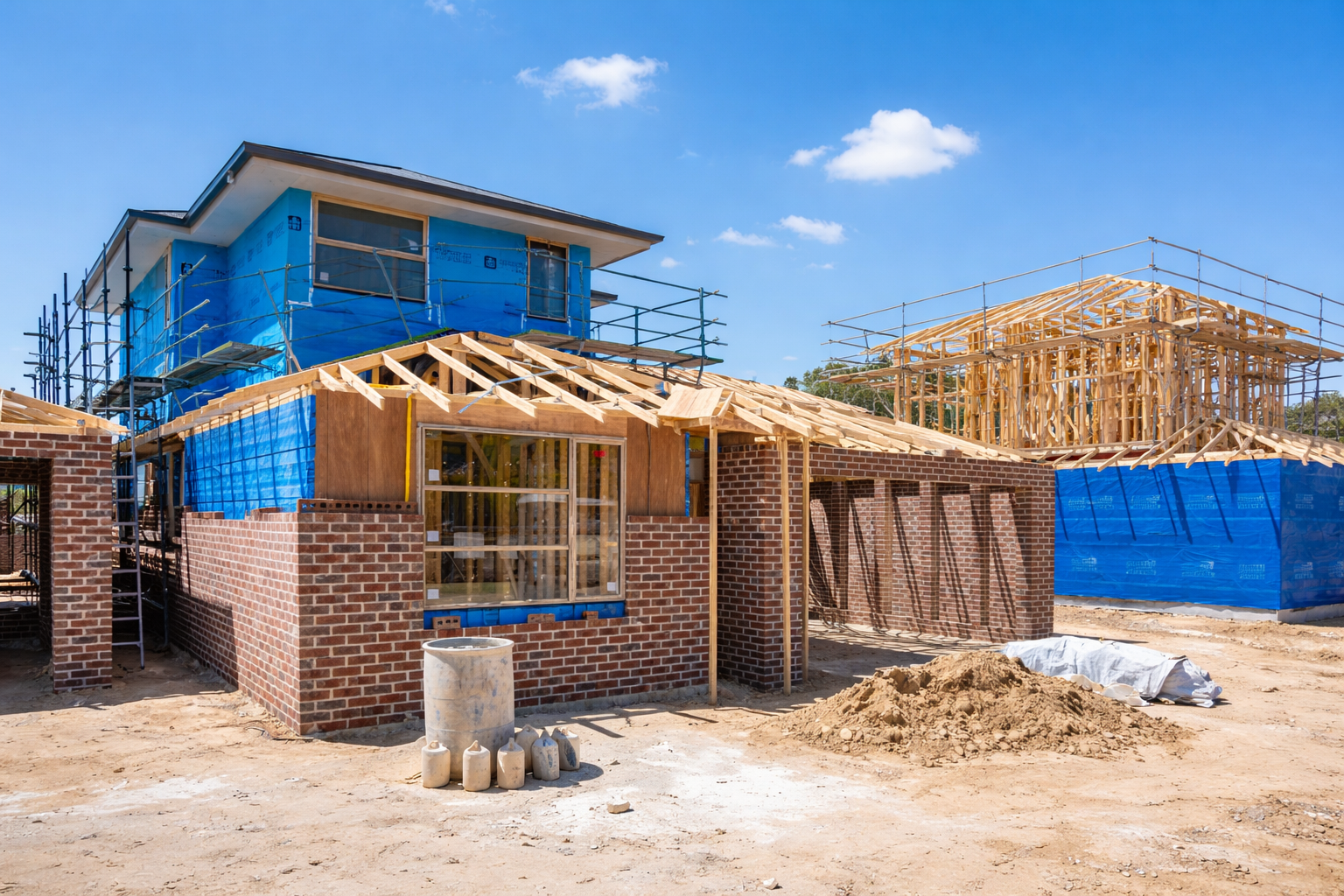
Construction loan borrowing power is the maximum amount a lender is willing to lend you to build a property, based on your income, expenses, debts, deposit, and the completed value of the home. It is assessed differently from standard home loans because funds are released in stages during construction.
Construction loan borrowing power refers to how much you can borrow to build a new home or complete a major renovation. Unlike a standard home loan, the lender does not release the full loan amount upfront. Instead, funds are paid progressively as each stage of construction is completed.
Lenders assess borrowing power using two key values:
-
The cost to build, and
-
The end value of the finished property, based on a valuation.
Your borrowing capacity is limited by whichever figure is lower once lending rules, loan-to-value ratios, and serviceability checks are applied.
Why Construction Loan Borrowing Power Matters
Borrowing power directly affects:
-
The size and design of your build
-
Whether your plans are affordable
-
How much deposit or equity you need
-
Whether your loan will be approved at all
Many borrowers assume they can afford a build based on construction quotes alone. In reality, lenders assess the project conservatively, factoring in buffers, interest rate rises, and potential cost overruns.
This is especially important for:
-
First-time builders
-
Owner-builders
-
Knock-down rebuild projects
-
Fixed-price vs cost-plus contracts
How Construction Loan Borrowing Power Is Calculated
Lenders generally assess construction loan borrowing power using the following steps:
-
Income assessment
Your employment income, bonuses, rental income, and other verified earnings are assessed. -
Expense review
Living expenses, credit cards, personal loans, HECS debts, and existing mortgages are factored in. -
Interest rate buffer
Your loan is assessed at a higher interest rate than the current rate to ensure affordability. -
Deposit or equity contribution
Lenders usually require a minimum deposit or usable equity, often 20% including land and build costs. -
Valuation of the completed property
The lender values the property as if construction is complete, not just the land value. -
Loan-to-value ratio limits
Borrowing power is capped by how much the lender is willing to lend against the final value.
How Construction Loans Differ From Standard Home Loans
-
Funds are released in progress payments, not one lump sum
-
Interest is charged only on the amount drawn, not the full loan
-
Valuations can be more conservative
-
Build contracts and council approvals are required upfront
-
Cash flow planning is more important
These differences mean borrowing power for construction is often lower than for a standard purchase, even with the same income.
Common Follow-Up Questions
How much can I borrow for a construction loan?
This depends on your income, debts, deposit or equity, and the lender’s assessment of the completed property value. Most borrowers can borrow up to 80% of the total land and build value without additional costs.
Does construction loan borrowing power include the land?
Yes. Borrowing power is usually assessed on the total project cost, which includes the land purchase price and the construction contract.
Is borrowing power lower for construction loans?
In many cases, yes. Lenders apply stricter rules, higher assessment buffers, and conservative valuations, which can reduce borrowing capacity compared to buying an established home.
Can I increase my construction loan borrowing power?
Borrowing power may improve by:
-
-
Reducing existing debts
-
Increasing your deposit or equity
-
Using a fixed-price building contract
-
Adjusting build specifications
-
Choosing a lender with more flexible assessment rules
-
Do progress payments affect borrowing power?
Progress payments do not change borrowing power, but they affect cash flow. You must be able to service repayments as the loan balance increases during construction.
Pros, Risks, and Key Considerations
Pros
-
Interest is only charged on drawn funds
-
Flexible loan structure during build
-
Can fund land and construction together
Risks and Considerations
-
Cost overruns can exceed approved borrowing power
-
Valuations may come in lower than expected
-
Delays can impact loan terms and cash flow
-
Higher upfront documentation requirements
Understanding borrowing limits early reduces approval risk and helps align your build plans with lender expectations.
Construction loan borrowing power determines how much you can borrow to build a home, based on your finances and the final value of the completed property. Because construction loans are assessed differently from standard home loans, borrowing capacity is often more conservative. Knowing your borrowing power early helps prevent budget blowouts, approval issues, and build delays.
Calculate How Much You Can Borrow for a Construction Loan
Our Reviews
We pride ourselves on being brokers you can actually trust, from the initial consultation through to annual reviews that we perform years after your settlement, our tailored services and relationship focus is built to last.
Need proof that we are one of Melbourne’s best mortgage brokerages? Don’t just take our word for it – we have hundreds of positive Google reviews from real clients so you can rest assured you’re making the right choice with choosing Find A Better Rate Home Loans.
Get in Touch
98% Approval Rate
18 Years Experience
18 Years Experience
98% Approval Rate
Latest Articles from Find A Better Rate
-
Aussie home owners just got $82,000 richer on average
What a way to start the new year! After a strong 12 months in the property market, plenty of homeowners around the nation are now a whole lot wealthier. And their newfound increase in home equity has opened up some exciting possibilities for 2026. Your home isn’t just a place to live in, it could…
-
Happy New Year! Let’s discuss some potential 2026 goals
There’s nothing quite like a New Year’s resolution to fire you up for another lap around the sun. Whether you’re looking to buy your first home, save on your mortgage, or leverage the equity in your current position, here are three resolutions to consider for 2026. So long, 2025 … You know what? We’ve got…
-
Season’s greetings! Here’s to a well-earned summer break
As the Christmas and New Year’s festive season rolls around, we want to take a moment to sincerely thank you for your trust and support throughout 2025. Fortunately, we had a bit more to smile about this year, with three RBA rate cuts and national property prices increasing by 8.7%. That said, 2025 wasn’t without its…



-
Aussie home owners just got $82,000 richer on average
What a way to start the new year! After a strong 12 months in the property market, plenty of homeowners around the nation are now a whole lot wealthier. And their newfound increase in home equity has opened up some exciting possibilities for 2026. Your home isn’t just a place to live in, it could…
-
Happy New Year! Let’s discuss some potential 2026 goals
There’s nothing quite like a New Year’s resolution to fire you up for another lap around the sun. Whether you’re looking to buy your first home, save on your mortgage, or leverage the equity in your current position, here are three resolutions to consider for 2026. So long, 2025 … You know what? We’ve got…
-
Season’s greetings! Here’s to a well-earned summer break
As the Christmas and New Year’s festive season rolls around, we want to take a moment to sincerely thank you for your trust and support throughout 2025. Fortunately, we had a bit more to smile about this year, with three RBA rate cuts and national property prices increasing by 8.7%. That said, 2025 wasn’t without its…
-
Your suburb’s 2025 property report card is in
You might’ve seen recent headlines that national property prices made another big jump this year. But do you know exactly how your suburb and property type performed? Well, today we’ll show you how to find out in just a few quick clicks. Over the past year, home prices have risen 8.7% nationally, according to PropTrack. If…
-
Aussie home owners just got $82,000 richer on average
What a way to start the new year! After a strong 12 months in the property market, plenty of homeowners around the nation are now a whole lot wealthier. And their newfound increase in home equity has opened up some exciting possibilities for 2026. Your home isn’t just a place to live in, it could…
-
Happy New Year! Let’s discuss some potential 2026 goals
There’s nothing quite like a New Year’s resolution to fire you up for another lap around the sun. Whether you’re looking to buy your first home, save on your mortgage, or leverage the equity in your current position, here are three resolutions to consider for 2026. So long, 2025 … You know what? We’ve got…
Secure Competitive Home Loan Rates with Trusted Mortgage Lenders
Select from 35+ Trusted Lenders and Tailored Home Loan Solutions